Binding vs. Non-Binding Moving Estimate, Explained
Before you can tell whether a delivery demand is over the line, you have to know which line applies. On an interstate move that comes down to one thing: whether your estimate is binding or non-binding. The word on your paperwork sets the ceiling.
This is general information, not legal advice, and it does not evaluate your particular documents. If a dispute is unfolding, consider asking a licensed attorney in your state to look at the actual papers. Below is how to read them yourself.
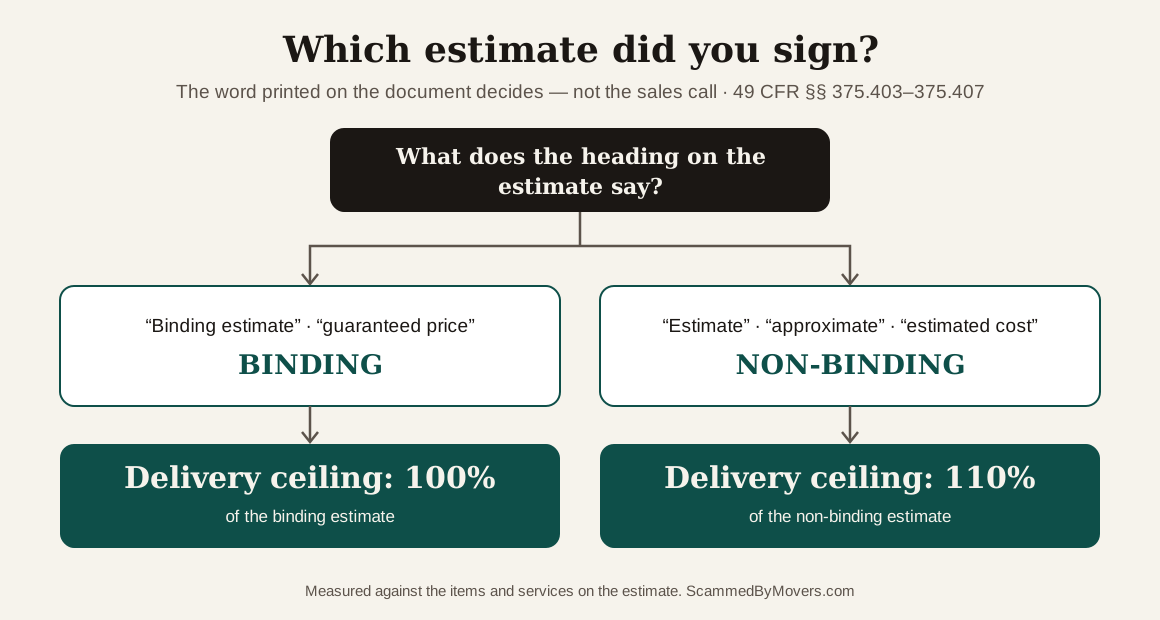
The practical tell: look at the word on the form
You usually do not have to guess. The estimate type is printed on the document.
- A binding estimate typically says “binding estimate” or describes a “guaranteed price.” It is a fixed price for the listed items and services.[1]
- A non-binding estimate typically uses the words “estimate,” “approximate,” or “estimated cost.” It is the mover’s best approximation, and the final charges are based on the actual weight and services — which is why the weight is where the money moves on a non-binding move.[4] A “guaranteed not-to-exceed” price is a consumer-friendly form of binding estimate — see not-to-exceed estimates.
Federal rules require movers to prepare these estimates in a specific way. Binding estimates are governed by 49 CFR § 375.403; non-binding estimates by § 375.405.[3] Both fall under FMCSA’s Subpart D on estimating charges.[2]
Why the type changes your ceiling: 100% vs. 110%
The estimate type does real work. It sets how much the mover can require you to pay at delivery before they must relinquish possession of your goods.
- Binding estimate → 100%. The mover may require 100% of the charges in the binding estimate at delivery.[3]
- Non-binding estimate → 110%. The mover may require no more than 110% of the charges in the non-binding estimate at delivery.[5]
In both cases the ceiling is measured against the items and services on the estimate. The deep dive on what that ceiling does and does not cover is in The 110% Rule, explained.
The 30-day note for non-binding moves
On a non-binding move, if the final documented charges exceed 110% of the estimate, the mover still has to release your shipment when you pay the 110%. The remainder gets billed later — FMCSA’s guidance describes deferring the remaining charges for at least 30 days after delivery, rather than collecting them as a condition of release.[5]
So on a non-binding move, “the bill came in high” and “they can hold my stuff until I pay all of it” are two different claims. The first can be true; the second runs into the 110% release threshold.
Check your numbers
Once you know your estimate type and the amount the mover is demanding at delivery, you can compare them directly.
Open the Overcharge Checker → Pick binding or non-binding, enter the estimate and the demand, and it shows the 100% or 110% release threshold and the gap. It reports the rule, not a verdict.
Make sure you are even in federal territory
These thresholds are federal, and they apply to interstate moves — ones that cross a state line. A move within a single state answers to that state’s rules instead. Confirm which you had before relying on the 100% / 110% framework: see Interstate vs. intrastate.
If the demand is over your ceiling
If the delivery demand exceeds the threshold for your estimate type and is not explained by documented added services, my moving company overcharged me lays out the ordered path.
Sources
Every legal claim above links to one of these official sources. Rules change — check the source if you're acting on this.