Movers Broke or Lost My Stuff: How a Damage Claim Works
If your belongings arrived broken, or some did not arrive at all, that is a different problem from an overcharge — it is a loss-and-damage claim against the carrier, with its own rules, deadlines, and dollar math. This page explains how those claims work on an interstate move. It is general information, not legal advice. (Damage to your home rather than your goods is a separate claim — see movers damaged my house — and items that genuinely vanished can shade into theft.)
This is a claim, not a price dispute
The 100% / 110% release rule is about what a mover can demand at delivery. Damaged or missing items are governed instead by the carrier’s liability for the goods themselves — the modern version of the long-standing Carmack Amendment.[1] What you can recover depends on the liability option recorded on your paperwork.
How much the mover owes: your liability option
Interstate movers must offer two levels of liability, and which one is on your bill of lading changes everything:[2]
- Released Value Protection — free, and minimal. The mover’s liability is capped at 60 cents per pound, per article. A 25-pound TV that is destroyed is worth $15 under this option, regardless of its real value. You have to sign a statement to choose it.
- Full Value Protection — the default if you do not select released value. The mover is liable for the replacement value of lost or damaged items (cost varies, and deductibles may apply). Items of “extraordinary value” — generally over $100 per pound, like jewelry — usually must be listed to be fully covered.
The deadlines: 9 months to file, 2 years to sue
Federal law sets minimums a carrier cannot shorten: at least 9 months to file the claim, and at least 2 years to bring a civil action if the claim is denied.[1] The clock starts at delivery. The Claim Deadline Checker turns your delivery, filing, and denial dates into the actual calendar dates — including the mover’s own 30-day acknowledgment and 120-day answer duties.
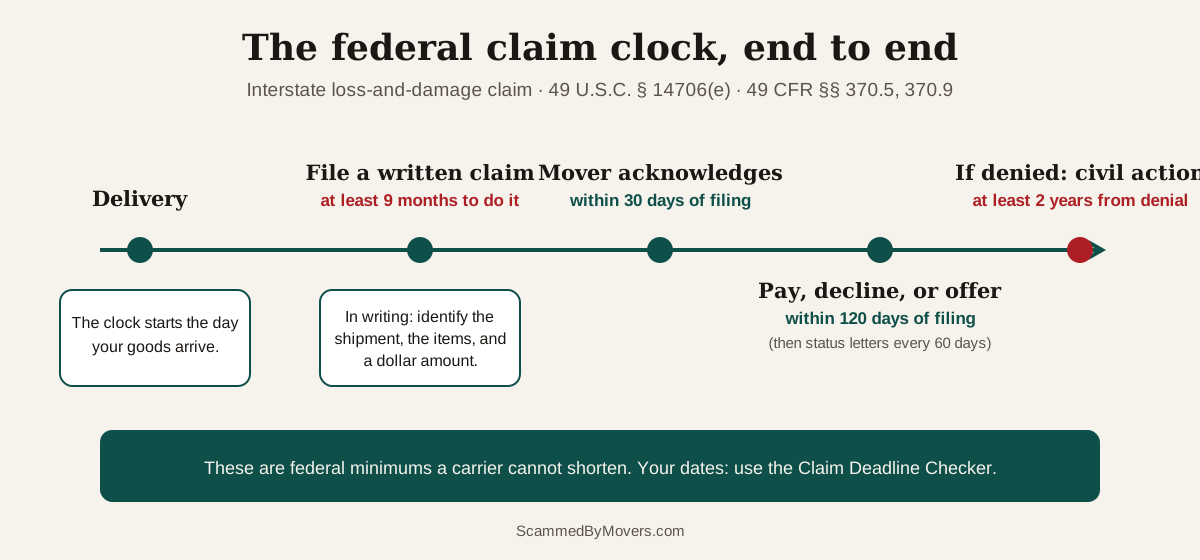
What a claim typically involves
A loss-and-damage claim generally takes written form: a claim to the mover that identifies the shipment (the bill of lading number), lists the lost or damaged items with the amount claimed for each, and attaches the inventory sheets, photographs, and receipts.[3] Copies, and the date it was sent, are part of the record.
If the mover lowballs or denies the claim
If the carrier refuses or offers far less than the loss, you have the reporting track (file with the FMCSA database for an interstate mover) and the money track (a civil action — see how to get your money back and small claims). The ordered path:
A loss-and-damage claim, step by step
-
Document the damage before anything moves
Photograph every broken or missing item, keep the inventory sheets and the bill of lading, and note any damage on the delivery paperwork before the crew leaves.
-
File a written claim with the mover
Identify the shipment by its bill-of-lading number, list each lost or damaged item with the amount you are claiming, and attach photos and receipts. Federal law gives you at least 9 months from delivery to file.
-
Know what caps your recovery
What the mover owes is set by the liability option on your bill of lading — 60 cents per pound per article (released value) or replacement value (full-value protection). Get any settlement offer in writing.
-
If it is denied or lowballed, consider arbitration
Every interstate mover must offer an arbitration program, and for a claim of $10,000 or less it is binding if you request it.
-
Put it on the federal record
File with the FMCSA National Consumer Complaint Database for an interstate mover. It tracks patterns and enforcement; it cannot recover your money for you.
NCCDB: nccdb.fmcsa.dot.gov · 1-888-368-7238 (1-888-DOT-SAFT).
How to file, step by step → -
Small claims or civil court
For the money itself, a civil action is the path — you generally have at least 2 years after a denial to sue.
Sources
Every legal claim above links to one of these official sources. Rules change — check the source if you're acting on this.